The Silk Road was far more than a mere conduit for silk; it was a vibrant artery of cultural and commercial exchange that forever altered the artistic and technological landscapes of both East and West. Among the most captivating commodities traded along these ancient routes were jewels and precious stones, whose journey from mine to market tells a story of profound intercultural dialogue. The trade in gems was not a simple transaction of luxury goods; it was a complex interplay of aesthetics, craftsmanship, and technological innovation that reflected and shaped the values of the societies it connected.
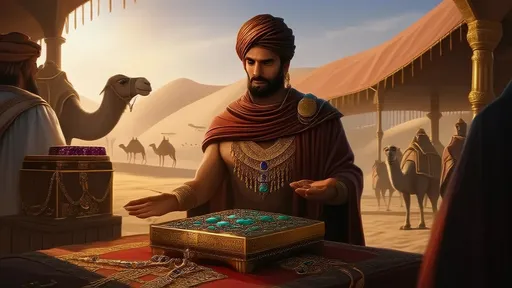
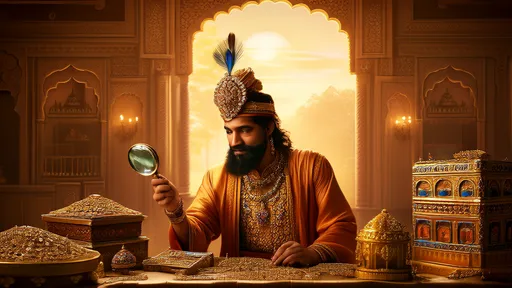
From the bustling bazaars of Samarkand to the imperial workshops of Chang'an, jewelry served as a universal language of power, faith, and beauty. The demand for exotic stones—lapis lazuli from the mountains of Afghanistan, pearls from the Persian Gulf, jade from the rivers of Khotan—fueled expeditions and fostered diplomatic relations. Caravans laden with these treasures did not just carry raw materials; they transported ideas. Eastern artisans marveled at the intricate gold granulation techniques of the West, while Western courts became enthralled by the subtle, symbolic carvings and impeccable polish of Eastern jade and nephrite. This was a two-way street of influence, where aesthetic perception was constantly being renegotiated.
The very technologies used to create these adornments began to cross borders. The secrets of glassmaking, developed to mimic the allure of rare gems like turquoise and lapis, traveled from Mesopotamia eastward. Conversely, advanced metallurgical techniques for working with gold and silver, including sophisticated soldering and alloying methods perfected in Sogdian and Byzantine workshops, found eager apprentices in the East. This technological transfer was rarely a direct copy. Instead, it was adapted, refined, and merged with local traditions. A Roman-inspired gold necklace might be unearthed in a Chinese tomb, but its design motifs have been subtly sinicized, featuring phoenixes instead of griffins. This synthesis created entirely new, hybrid art forms that were uniquely of the Silk Road.
Perhaps the most telling evidence of this blending and melting lies in the religious iconography preserved in jewelry. Buddhist motifs, traveling from India through Central Asia and into China, were often rendered in gold and silverwork techniques borrowed from the Hellenistic world, a style known as Greco-Buddhist art. A pendant might depict the Buddha with the realistic drapery of a Greek god, crafted using repoussé methods from Persia. Similarly, Christian crosses and Zoroastrian symbols, inlaid with pearls and garnets, have been discovered along the trade routes, demonstrating how spiritual beliefs were literally worn on the sleeve, their representations influenced by a pan-Eurasian pool of artistic ideas.
The impact of this trade extended deep into the social and economic structures of the ancient world. Control over gem mines and trade routes became a paramount concern for empires, from the Romans to the Tang Dynasty. The value assigned to certain stones fluctuated based on cultural preferences; while the West prized transparent, faceted gems like diamonds and sapphires for their brilliance, the East often valued opaque or translucent stones like jade and turquoise for their symbolic meaning and texture. This difference in aesthetic perception itself became a driver of trade, as each civilization sought what the other held dear, creating a sustainable economic cycle of mutual desire.
In conclusion, the jewelry trade on the Silk Road was a dazzling kaleidoscope of human creativity. It was a process of continuous exchange where a gemstone’s worth was measured not just in carats, but in the technical knowledge required to work it and the cultural meaning it embodied. The necklaces, belts, and crowns that survive in museums today are more than beautiful artifacts; they are silent witnesses to an ancient conversation between civilizations. They remind us that innovation is often born at the crossroads, and that true beauty emerges from the fusion of different worlds, a legacy of connectedness that still resonates in the globalized world of today.
By /Aug 27, 2025
By /Aug 27, 2025
By /Aug 27, 2025

By /Aug 27, 2025
By /Aug 27, 2025

By /Aug 27, 2025
By /Aug 27, 2025

By /Aug 27, 2025
By /Aug 27, 2025
By /Aug 27, 2025
By /Aug 27, 2025
By /Aug 27, 2025
By /Aug 27, 2025
By /Aug 27, 2025
By /Aug 27, 2025
By /Aug 27, 2025
By /Aug 27, 2025
By /Aug 27, 2025
By /Aug 27, 2025

By /Aug 27, 2025
