In the hushed ateliers of high jewelry houses, where velvet-lined trays hold more value than most real estate portfolios, the journey of a celebrity gem begins not with glitter, but with graphite. It starts as a whisper of an idea, a fleeting sketch on a page that is as much a work of art as the finished piece it will become. This is the origin story of red-carpet royalty, a meticulous and often secretive process that transforms raw inspiration into a headline-grabbing masterpiece destined to adorn a global icon.
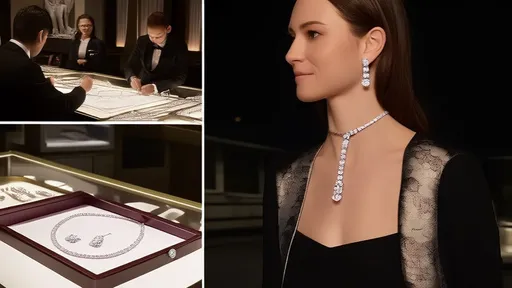
The initial spark is a collaborative fire. A celebrity’s stylist, acting as both confidant and curator, engages in discreet dialogues with the design directors of prestigious maisons. They discuss upcoming events, the narrative of an actor’s awards season, the color of a gown, and the persona the star wishes to project. Is it old-world glamour, avant-garde edge, or timeless elegance? From these conversations, a creative brief is born, setting the stage for the artisans to work their magic. The designer then retreats, translating this vision into a series of intricate drawings. Every curve, every prong, every potential point of light is considered. These are not mere blueprints; they are promises of brilliance.
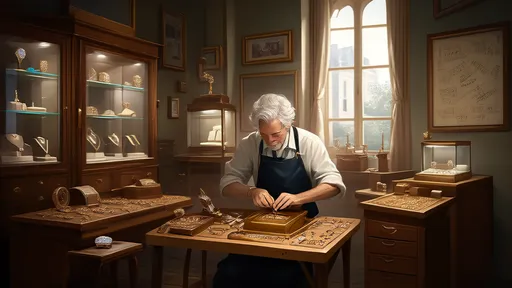
Once the final design is approved, the workshop springs to life. This is where art meets alchemy. Master jewelers, whose hands possess decades of muscle memory, begin the painstaking process of model-making. They carve the piece in wax, a fragile negative space that will soon be filled with molten gold or platinum. The setting is crafted with microscopic precision, each claw and channel designed to hold stones with an invisible grip, allowing for maximum luminosity. It is a ballet of files, torches, and polishing wheels, a symphony of traditional techniques passed down through generations.
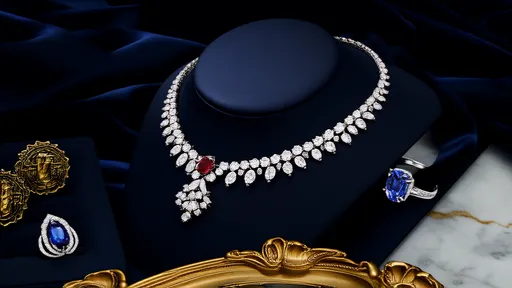
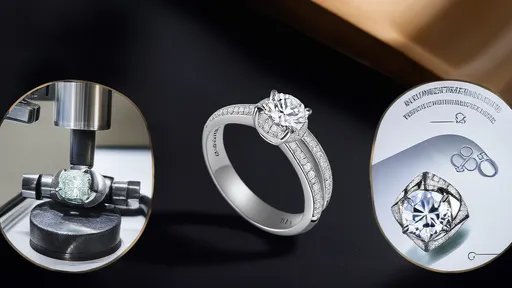
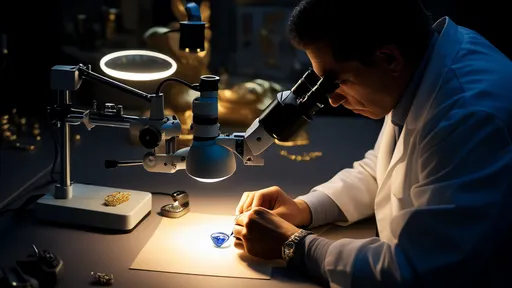
Then comes the soul of the piece: the stones. A team of gemologists embarks on a global quest, sorting through hundreds, sometimes thousands, of diamonds and colored gems to find the perfect matches. They are not just evaluating the classic four Cs—cut, color, clarity, and carat. They are searching for a harmony of fire and life, ensuring each stone talks to its neighbor. A central sapphire might be sourced from Ceylon, its cornflower blue depth unmatched, while the surrounding pavé diamonds are hand-selected for their perfect white light. Each gem is meticulously plotted on a diagram, a celestial map waiting to be brought to life.
The assembly is a nerve-wracking event. The setter, peering through a loupe fixed to their eye, works under intense light, using specialized tools to gently coax each priceless stone into its designated place. The sound is a faint, rhythmic tapping, a stark contrast to the immense value taking form under their hands. After the final stone is secured, the polishers take over, buffing the metal to a mirror finish until it disappears, leaving only a constellation of light seemingly suspended in air. The piece is weighed, photographed, and entered into the ledger, its existence now official.
But its journey is only half complete. Now, it must travel from the secure vault to the wrist, neck, or ear of its temporary custodian, often on another continent. This is where the narrative shifts from creation to protection, a high-stakes operation that would impress any intelligence agency. The piece is placed in a custom, non-descriptive shock-proof case. Its travel itinerary is known only to a handful of security executives. It will never, ever, be checked as luggage.
Armed couriers, often former military or intelligence personnel, transport the case. Their movement is calculated down to the minute. They use private entrances and exits, avoid predictable patterns, and sometimes even employ decoy vehicles or couriers to ensure the safety of their cargo. The jewelry is insured for an astronomical sum, but its irreplaceable nature makes its safe delivery the only acceptable outcome. Upon arrival in the city of the event, it is taken directly to a high-security hotel vault or a temporary, fortified room, often under 24/7 guard.
The final act of the handover is a ritual of trust and precision. The security team, the designer, or a senior maison representative personally brings the piece to the celebrity. In a hotel suite buzzing with stylists, hairstylists, and publicists, the jewelry is unveiled. It is the first time the star sees the physical manifestation of all those initial discussions and sketches. It is a moment of pure magic. They try it on, assessing how it catches the light, how it moves with their body. The final adjustments are made—a link removed, a clasp tightened.
Hours later, under the blinding flash of the paparazzi’s cameras, the journey culminates. The celebrity steps onto the red carpet. The jewelry is no longer just an object; it is an extension of their aura, a key part of the story they are telling the world. It sparkles under the lights, each facet telling a tale of artistic passion, artisan skill, and logistical prowess. For one night, it belongs to them. The next morning, the process reverses. The couriers return, the piece is collected, inspected with the same fervor it was created with, and returned to the vault. Its red-carpet life is over, but its legend is just beginning, forever immortalized in a thousand photographs and in the annals of jewelry history.
By /Aug 27, 2025

By /Aug 27, 2025

By /Aug 27, 2025

By /Aug 27, 2025
By /Aug 27, 2025

By /Aug 27, 2025

By /Aug 27, 2025

By /Aug 27, 2025

By /Aug 27, 2025

By /Aug 27, 2025
By /Aug 27, 2025
By /Aug 27, 2025
By /Aug 27, 2025
By /Aug 27, 2025

By /Aug 27, 2025
By /Aug 27, 2025
By /Aug 27, 2025
By /Aug 27, 2025

By /Aug 27, 2025

By /Aug 27, 2025
