The Roaring Twenties heralded an era of unprecedented change, and nowhere was this more vividly expressed than in the glittering world of Art Deco jewelry. Emerging from the 1925 Exposition Internationale des Arts Décoratifs et Industriels Modernes in Paris, this style became a visual symphony of modernity, capturing the zeitgeist of an age intoxicated by progress, speed, and a bold new aesthetic language. It was a decisive break from the soft, naturalistic forms of Art Nouveau and the ornate historicity of the Victorian era. Instead, Art Deco embraced the machine age, celebrating geometry, precision, and a dynamic sense of movement. Jewelry was no longer merely an accessory; it became a powerful statement of modernity, worn by the flappers and socialites who defined the Jazz Age.
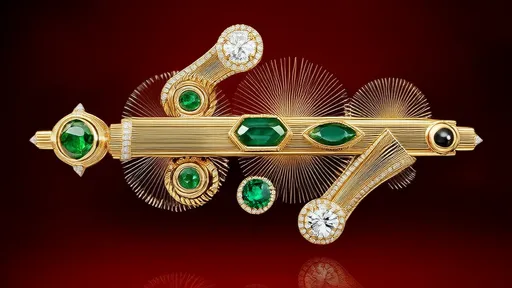
At the very heart of Art Deco design lies an unwavering fascination with geometry. Designers turned their backs on the flowing, asymmetrical lines of their predecessors, finding inspiration in the stark, clean lines of Cubism, the stepped forms of ancient ziggurats, and the pure shapes of the machine. The bracelet was no longer a simple band but a rigid, articulated cuff of platinum or white gold, its surface a precise mosaic of baguette-cut diamonds and onyx, forming sharp chevrons and sunburst patterns. Pendants became architectural marvels, suspended from long platinum chains, their forms composed of perfect circles, squares, and triangles. Even the traditional floral motif was abstracted into a geometric arrangement of petals and leaves, rendered in contrasting colored gemstones like sapphires, emeralds, and rubies, all held in stark, openwork settings that emphasized the negative space as much as the gemstones themselves.
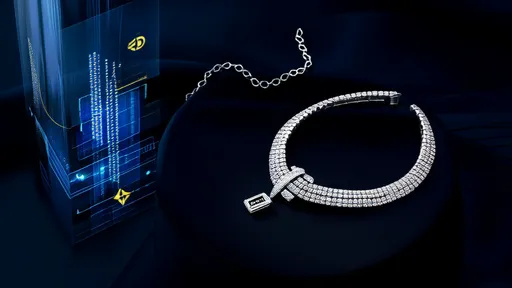
This geometric rigor was intrinsically linked to the era's obsession with speed and movement. The world was accelerating, with automobiles, ocean liners, and airplanes shrinking distances and capturing the public imagination. Jewelry designers sought to capture this kinetic energy in static objects. They employed repeating patterns, like parallel lines and concentric circles, to create a visual rhythm that suggested velocity. The famous "invisible set" technique, where gemstones were placed channel-to-channel with no visible metal between them, created seamless surfaces that seemed to glide and shimmer with the wearer's every move. Tassel necklaces, composed of hundreds of tiny platinum chains tipped with diamonds, swung and danced with a life of their own, embodying the energetic spirit of the Charleston. This was jewelry designed for motion, for the modern woman who was always on the go.
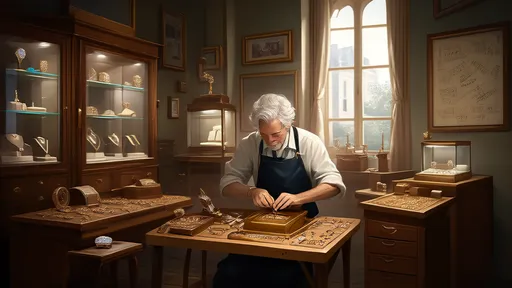
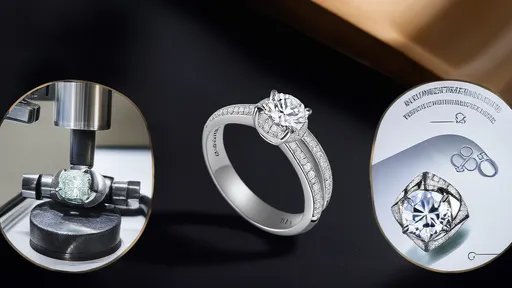
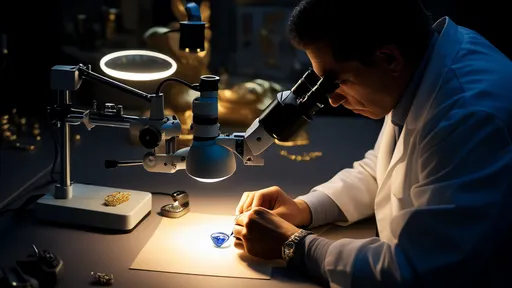
Underpinning this entire aesthetic was a profound celebration of the machine and industrial beauty. For the first time, the precision and polish of industrial manufacturing were not something to be hidden but were proudly displayed as virtues. Platinum, strong yet malleable, became the metal of choice, its cool, silvery whiteness providing the perfect canvas for diamonds and providing a stark contrast to the bold lacquer black of onyx or jet. The settings themselves were feats of micro-engineering—delicate yet strong platinum millegrain edges, pavé work where stones were set so closely together the metal base seemed to disappear, and intricate calibré-cut gemstones that were custom-shaped to fit perfectly into their geometric designs. This was jewelry that acknowledged its own making, celebrating the tools and techniques that brought it into being. It reflected a society that saw the machine not as a cold, impersonal force, but as a tool for creating a new, more brilliant world.
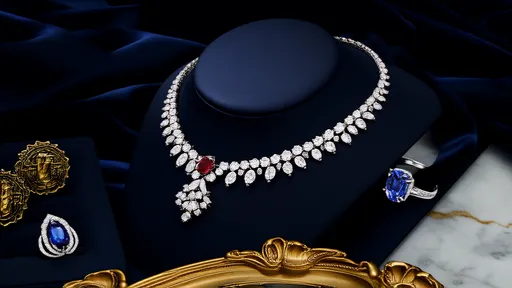
The gemological palette of Art Deco was as deliberate and modern as its forms. While the classic white diamond remained paramount for its brilliance and ability to be cut into precise geometric shapes, it was almost never used alone. Designers played with dramatic, high-contrast color combinations that were shocking in their modernity. The quintessential pairing was brilliant white diamonds with stark black onyx, a combination that screamed sophistication and graphic power. Deep blue sapphires, rich emeralds, and blood-red rubies were used in bold, flat panels of color, often calibré-cut to fit seamlessly into the design. Coral, jade, lapis lazuli, and rock crystal were also incorporated, their opaque, monolithic qualities further emphasizing the geometric and architectural feel. This fearless use of color was a direct reflection of the Ballets Russes, which had taken Paris by storm years earlier with its vibrant, exotic, and non-naturalistic costumes and sets.
The legacy of Art Deco jewelry is enduring. It represents a pinnacle of craftsmanship where the hand of the artisan and the potential of the machine found a perfect, harmonious balance. It was a style of unparalleled confidence and optimism, born in an era that believed in a shiny, streamlined future. To hold a piece of Art Deco jewelry is to hold a fragment of that roaring, dynamic energy—a perfect, geometric, and brilliantly faceted artifact from a world hurtling headlong into the modern age. It remains as powerful and captivating today as it was a century ago, a true hymn to geometry, speed, and mechanical beauty.
By /Aug 27, 2025

By /Aug 27, 2025

By /Aug 27, 2025

By /Aug 27, 2025
By /Aug 27, 2025

By /Aug 27, 2025
By /Aug 27, 2025

By /Aug 27, 2025

By /Aug 27, 2025
By /Aug 27, 2025
By /Aug 27, 2025
By /Aug 27, 2025
By /Aug 27, 2025
By /Aug 27, 2025
By /Aug 27, 2025
By /Aug 27, 2025
By /Aug 27, 2025
By /Aug 27, 2025

By /Aug 27, 2025
By /Aug 27, 2025
